What is a CISO?
A chief information security officer (CISO) provides executive leadership on cybersecurity, and organizations rely on a chief information security officer to protect critical digital assets. CISOs need to have a solid understanding of IT infrastructure and the myriad of potential threats to technology systems. A CISO usually reports to the company’s chief executive officer (CEO), works closely with the chief information officer (CIO), and manages a team of IT and security employees.
CISOs may also be referred to as chief security architects, security managers, information security managers, and corporate security officers, depending on the company’s structure and existing titles. Many organizations align these roles with CIO consulting services to strengthen leadership, ensure cohesive technology strategies, and maximize the value of their CIO consulting services investments.
Responsibilities of a CISO
A chief information security officer oversees security policies, risk management, and governance to ensure the organization’s information is protected from threats. CISOs must work with other executives in different departments to align security initiatives with larger business goals and objectives. A CISO’s job duties include:
- Assessing the company’s information security and its vulnerabilities
- Analyzing IT security threats in real-time and mitigating these threats
- Planning, designing, and implementing an IT and network strategy for the company
- Sourcing the necessary hardware and software to implement the IT strategy and negotiate contracts
- Educating employees on best information security practices and policies
- Ensuring that only authorized personnel have access to restricted data and systems
- Staying ahead of emerging cyber security technologies, software, and trends
- Determining the cause of internal and external data breaches and responding accordingly
- Meeting and sharing information regularly with executives, board members, and company stakeholders
How to Become a Chief Information Security Officer
Aspiring to become a chief information security officer requires progressive experience in IT and cybersecurity roles, culminating in strategic leadership responsibilities. Ideally, a CISO has both strong technical and leadership skills. A CISO candidate should have the following qualifications:
- A bachelor’s degree in computer science, information technology, or related field
- At least seven to 10 years of professional experience in risk management, information security, or programming
- IT security certifications and training, such as Certified Authorization Professional (CAP) and Certified Information Systems Security Professional (CISSP)
- Knowledge of information security management frameworks, such as ISO/IEC 27001 and NIST
- Excellent understanding of current legislation and regulations relevant to the company, as well as industry trends and developments
Top Skills For CISOs
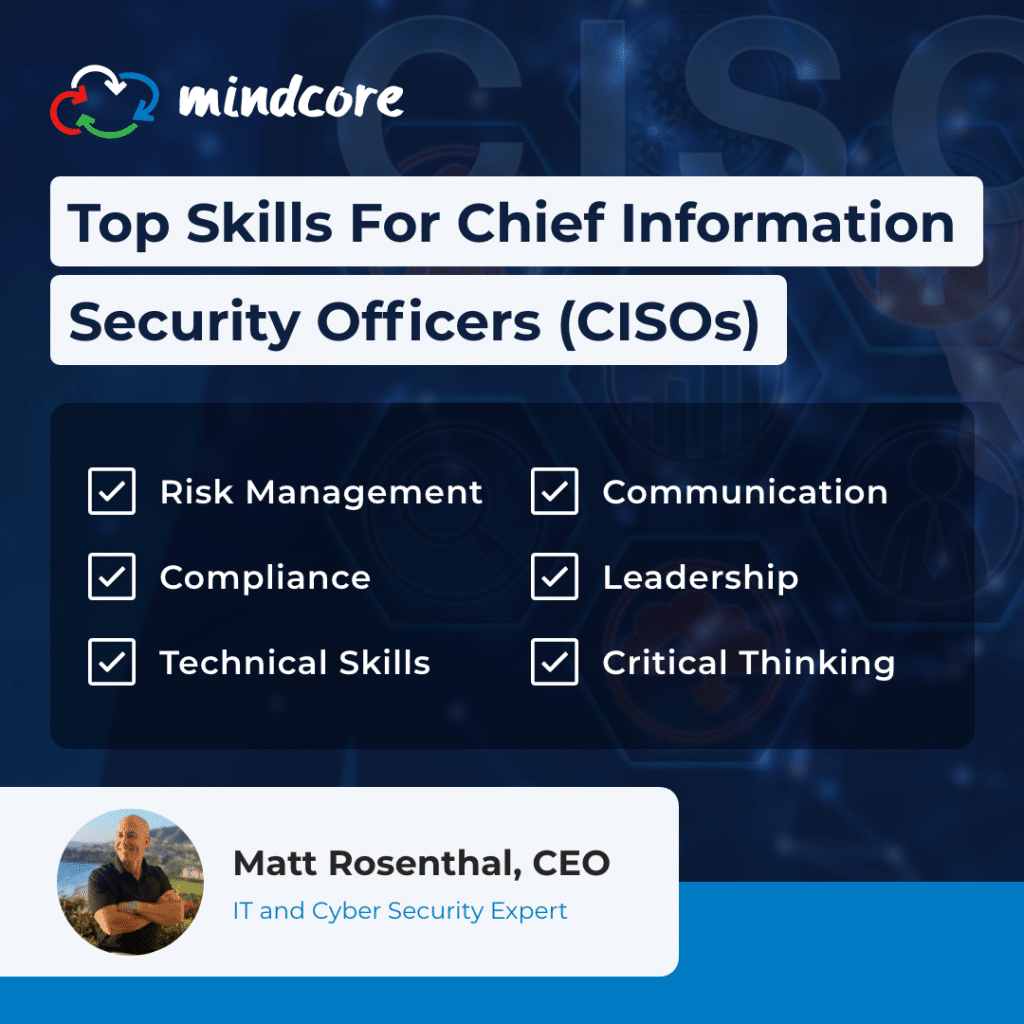
The CISO role goes beyond expertise in information security and requires an advanced set of skills to succeed. The top CISO skills to develop, list on your resume, and describe during job interviews include:
Risk Management
A CISO needs to identify, manage, and prevent all of the security risks associated with employers, partners, vendors, IT tools, and processes. They must understand these risks and how to reduce or prevent them in the future.
Compliance
Compliance is another key focus area for CISOs. They are expected to keep up with changing industry regulations to ensure policies and data practices are compliant.
Technical Skills
A chief information security officer brings technical expertise in IT architecture, data protection, identity management, network security, and disaster recovery planning.
Communication
The chief information security officer leads security teams, communicates risk to executives, and ensures all stakeholders understand organizational cybersecurity strategies.
Leadership
A company’s CISO has extensive managerial experience and knows how to train and guide technical teams. When a breach occurs, they should be able to give instructions on how to resolve the situation with confidence.
Critical Thinking
CISOs are quick-witted and resourceful, having the knowledge and skills to identify problems and find the best ways to solve them.
Cyber Security for Businesses in NJ & FL
Are you looking to enhance your organization’s cyber security and stay protected against the latest cyber attacks and data breaches? Mindcore provides leading cyber security solutions in New Jersey and Florida. Please schedule a consultation with us today to speak with one of our cyber security experts.
Frequently Asked Questions
What is a Chief Information Security Officer?
A Chief Information Security Officer is a senior executive responsible for overseeing an organization’s cybersecurity strategy, information security programs, risk management, and protection of digital assets and sensitive data.
What are the primary responsibilities of a CISO?
A CISO develops security policies, manages cyber risk, oversees incident response, monitors threats, aligns security with business objectives, ensures compliance, and leads security teams across the organization.
Why is risk management important for CISOs?
Risk management helps CISOs identify vulnerabilities, evaluate business impact, prioritize security initiatives, and reduce exposure to cyber threats that could disrupt operations or compromise sensitive information.
What skills are important for a successful CISO?
Important CISO skills include cybersecurity expertise, risk management, compliance knowledge, leadership, communication, critical thinking, incident response planning, and understanding of security frameworks such as NIST and ISO 27001.
Why do businesses need executive cybersecurity leadership?
Executive cybersecurity leadership helps organizations align security with business strategy, improve governance visibility, strengthen operational resilience, reduce regulatory risk, and respond effectively to evolving cyber threats.
Executive Cybersecurity Leadership Expertise from Matt Rosenthal
Matt Rosenthal, CEO of Mindcore Technologies, has extensive experience helping organizations strengthen cybersecurity leadership, operational resilience, and enterprise risk management across complex business environments. His expertise in cybersecurity governance, incident response, identity management, compliance readiness, threat monitoring, vulnerability management, and strategic security planning helps businesses align security operations with long-term organizational goals. His leadership focuses on building proactive cybersecurity frameworks that improve executive visibility, strengthen governance maturity, reduce operational risk, and support scalable enterprise security strategies.