In today’s cybersecurity world, technical skills are no longer enough. If you want to stand out, move up, or get hired faster, you need more than just experience. You need proof. And that’s where cybersecurity compliance certifications come in.
Getting certified shows employers you’re serious. It gives them confidence that you understand the rules, the risks, and the frameworks that protect businesses from threats. In this guide, you’ll learn why certifications matter, which ones to consider, and how they fit into your career.
Why Certifications Matter in Compliance Roles
The hiring advantage
Employers trust certifications. When two candidates have similar experience, the one with credentials like ISO 27001 or CISA often moves forward. That’s because certifications show that you understand real-world cybersecurity compliance frameworks, not just general IT concepts.
In competitive job markets, this makes a big difference. You’ll often see certifications listed as “preferred” or even “required” on cybersecurity compliance analyst job listings.
Career growth and credibility
If you’re aiming to manage a cybersecurity compliance program or lead audit efforts, certifications can fast-track that goal. They give you tools and vocabulary that help in high-level conversations—whether you’re working with regulators, legal teams, or executive leadership.
They also show that you’re prepared to take on complex roles beyond day-to-day policy tasks.
Entry-Level Certifications to Build Your Foundation
Not all certifications are for senior professionals. Some certifications are ideal for beginners trying to get into the field.
Security+ by CompTIA
This cert provides a very good baseline of security concepts, risk management, and compliance principles. It is suitable for those starting or transitioning from IT support into cybersecurity compliance jobs.
Certified in Cybersecurity (CC) by ISC²
This is a recently developed certification for those with little or no background in security. It concentrates on core security, governance, and risk principles.
ISO 27001 Lead Implementer (Beginner-Friendly Option)
Although ISO 27001 is frequently considered advanced, the “Lead Implementer” certification is ideal for those who want to go into building and running a cybersecurity compliance framework from scratch.
Intermediate Certifications That Deepen Your Skills
If you’ve been working in the field for a year or more, these credentials can help you move into more specialized or leadership positions.
CISA (Certified Information Systems Auditor)
This certification is focused on audit and control. It is especially relevant if your present job duties include audit preparation or risk assessments. Many practitioners in cybersecurity compliance services pursue this certification to strengthen their understanding of technical audits.
CRISC (Certified in Risk and Information Systems Control)
CRISC is all about aligning IT risk with business goals. It’s ideal for GRC specialists and those managing risk across teams.
CIPP/US or CIPP/E
These privacy certifications are great for professionals who work on data privacy regulations. CIPP/US concentrates on the U.S. laws such as HIPAA and GLBA, while CIPP/E concentrates on GDPR.
Advanced Certifications for Leadership and Specialization
If you are interested in senior roles, more advanced training is necessary. These certifications qualify you for program leadership and strategic decision-making.
CISSP (Certified Information Systems Security Professional)
Generally, CISSP is looked at as a criterion for leadership roles in security and compliance. It covers everything from governance to security architecture.
CIPM (Certified Information Privacy Manager)
This cert deals with privacy program management. This would be a good choice to pursue if you are planning to become a data protection officer or manage internal compliance teams.
PMP or CGEIT
While not specific to compliance, these certifications are good for showing you have the ability to manage complex projects and governance efforts. They come in handy when building a full cybersecurity compliance program.
Choosing the Right Certification for Your Career Path
Match certs to your role
If you’re a junior analyst, Security+ and ISO 27001 are smart picks. For audit-heavy work, go with CISA. If you’re planning to work in a privacy-heavy field, consider CIPP/US.
If you’re aiming for a mid- or senior-level position, CISSP, CRISC, or PMP may be better aligned. Many of these align with paths we’ve covered in our post on becoming a cybersecurity compliance analyst.
Consider your industry
Healthcare, finance, and government contractors often have specific compliance regulations. Make sure the certifications you choose map well to your industry. If you’re working with vendors or large accounts, certifications can also help with vendor trust and contract requirements.
Align with long-term goals
Some professionals want to move into policy and strategy. Others want to stay technical but specialize in risk. Your certification path should reflect where you want to go, not just where you are now. Some even aim for multiple credentials to position themselves broadly in the cybersecurity compliance job market.
What Employers Look for Beyond the Badge
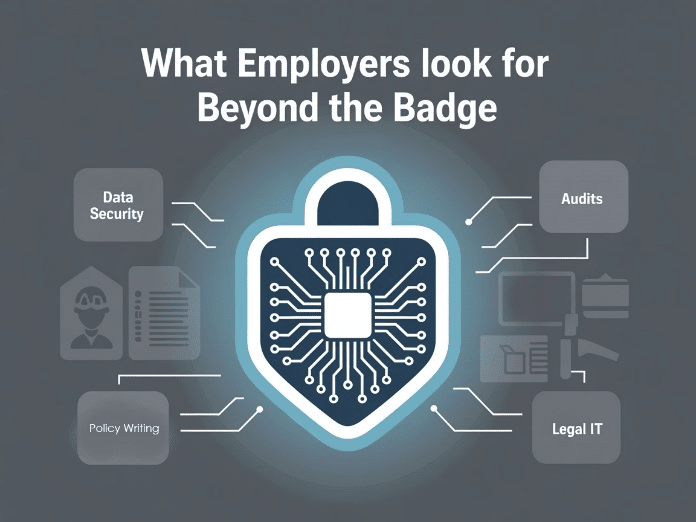
Certifications are important, but they’re not the whole story. Hiring managers still want people who can:
- Write clear and accurate policies
- Conduct real audits and risk assessments
- Use frameworks like NIST or PCI DSS in day-to-day tasks
- Collaborate across departments like HR, legal, and IT
Certs help get you noticed, but experience and communication still matter. If you’re pursuing certifications, pair them with real-world projects and documentation tasks whenever possible.
This is especially important when supporting audit cycles or implementing new cybersecurity compliance standards across a growing company.
Final Thoughts: Credentials That Build Long-Term Value
Getting certified isn’t just about a badge on your resume. It’s a long-term investment in your future.
Whether you’re just starting out or aiming for leadership, the right certification helps you:
- Stand out in a crowded job market
- Prove your value in compliance-heavy industries
- Move from policy work into strategy
- Support full-scale cybersecurity compliance programs
In short, it’s one of the best ways to show you’re ready for bigger challenges. And as more companies adopt stricter cybersecurity compliance standards, your credentials could be the thing that sets you apart.
If you want to explore more about jobs, salary expectations, or what a full program looks like, check out our guides on compliance career paths and framework building. Certifications open doors. You just have to know which ones lead where you want to go.
Frequently Asked Questions
Why are cybersecurity compliance certifications important?
Cybersecurity compliance certifications validate expertise in security frameworks, governance, auditing, risk management, and regulatory compliance. They help professionals demonstrate credibility, improve career opportunities, and qualify for more advanced compliance and leadership roles.
What are the best entry-level cybersecurity compliance certifications?
Popular entry-level certifications include CompTIA Security+, ISC² Certified in Cybersecurity, and ISO 27001 Lead Implementer. These certifications help build foundational knowledge in cybersecurity, governance, and compliance principles.
Which certifications are best for audit and risk management roles?
CISA and CRISC are highly respected certifications for professionals focused on auditing, governance, and IT risk management. They help strengthen expertise in controls, assessments, and compliance program oversight.
How do certifications help career advancement in cybersecurity compliance?
Certifications help professionals qualify for leadership roles, improve hiring competitiveness, strengthen industry credibility, and demonstrate knowledge of real-world compliance frameworks such as NIST, HIPAA, ISO 27001, and PCI DSS.
Are certifications enough to succeed in cybersecurity compliance?
No, certifications should be combined with practical experience, communication skills, policy development, audit preparation, and cross-functional collaboration. Employers value professionals who can apply cybersecurity and compliance knowledge operationally.
Cybersecurity Compliance Leadership Expertise from Matt Rosenthal
Matt Rosenthal, CEO of Mindcore Technologies, has extensive experience helping organizations build mature cybersecurity governance and compliance programs across highly regulated industries. His expertise in security frameworks, audit readiness, risk management, identity governance, operational resilience, and compliance strategy helps businesses align technical controls with real-world regulatory requirements. His leadership focuses on developing proactive compliance strategies that strengthen accountability, improve organizational trust, support workforce development, and build long-term cybersecurity resilience.